
2 minutes read
Gold! Gold! Gold! Gold! Whispers of the gold rush spread as the SS Portland docked in Seattle with two tons of gold and 68 rich miners. Summer 1897 marked the debut of a long journey for gold seekers. Let’s revisit their grand adventure from Seattle to Canada’s remote territories.
The Gold Fever
In August 1896, three prospectors found gold on Bonanza Creek on the Klondike River. News spread the following summer, and the Klondike Gold Rush began.
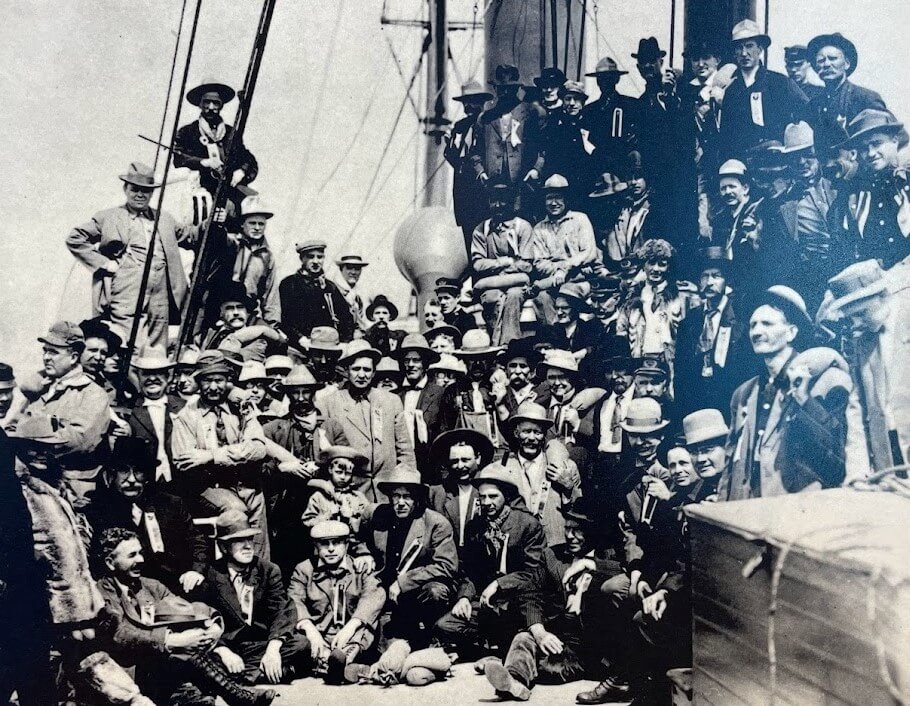
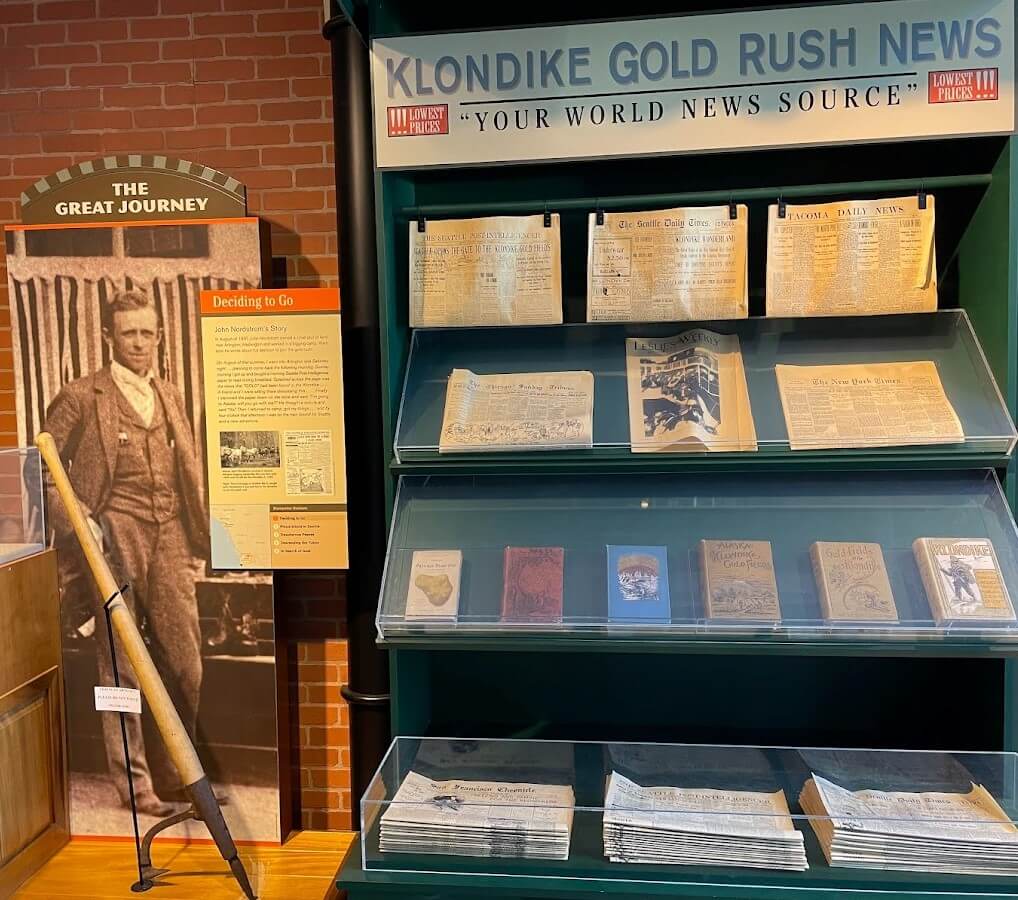
Seattle competed with other West Coast cities to attract gold seekers. Erastus Brainerd, leader of the Chamber of Commerce, promoted the city nationwide. According to ads in newspapers, the city was the “only place” for Klondikers. As a result, nearly 70% of travelers passed through Seattle (estimated to be 70,000 people).

The city prospered after the years of economic depression. Farmlands and local industries have developed to offer food, supplies, tools, and shelter to stampeders.


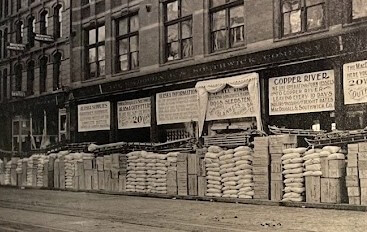
Shop owners piled up merchandise on the sidewalks. Indeed, Canada’s Mounties required one year of supplies to admit people in their territory. This “ton of goods” cost between $250 to $500. It included 350 pounds of flour and 150 pounds of bacon.
In July 1898, an Assay office opened to convert prospector’s gold nuggets into bars. Over the first two years, this office certified more than 20 million dollars worth of gold.


Did you know?
Sourdough was the nickname given to people who spent at least one winter in Alaska.
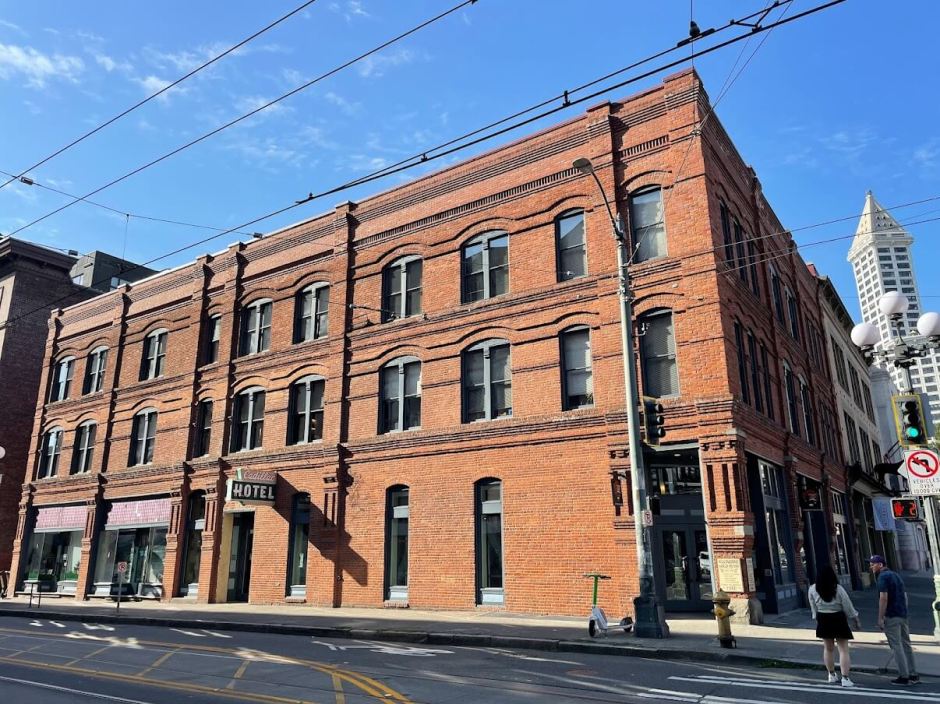
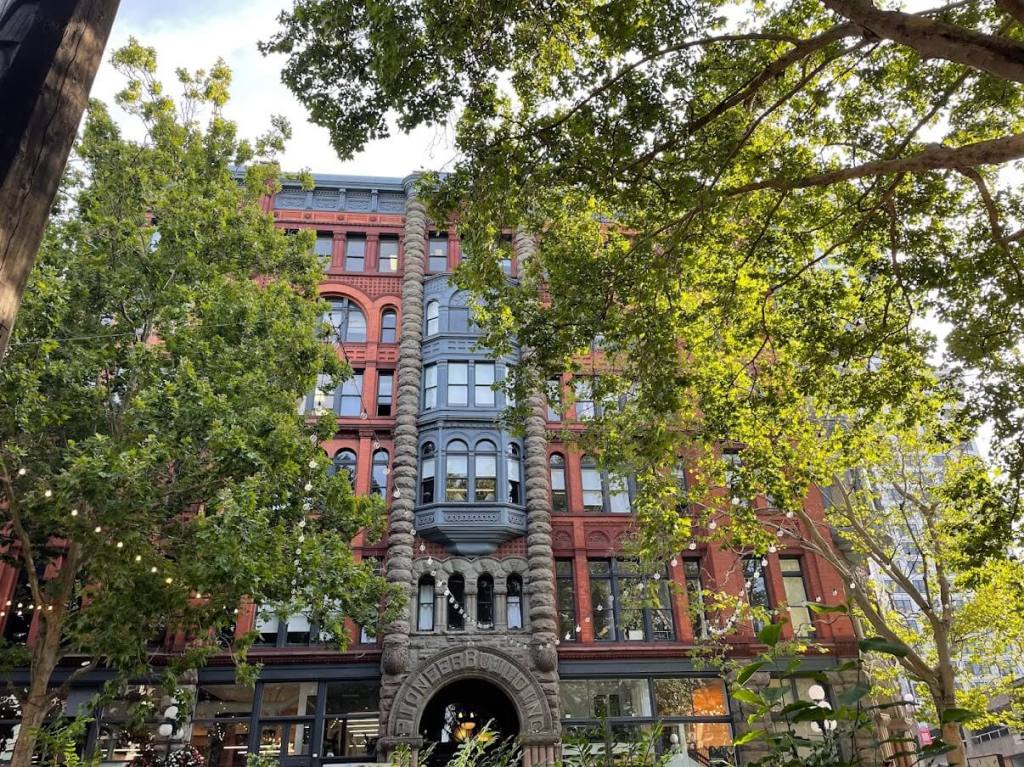
The below Pioneer Building housed 48 mining firms during the Gold Rush era.
The Journey
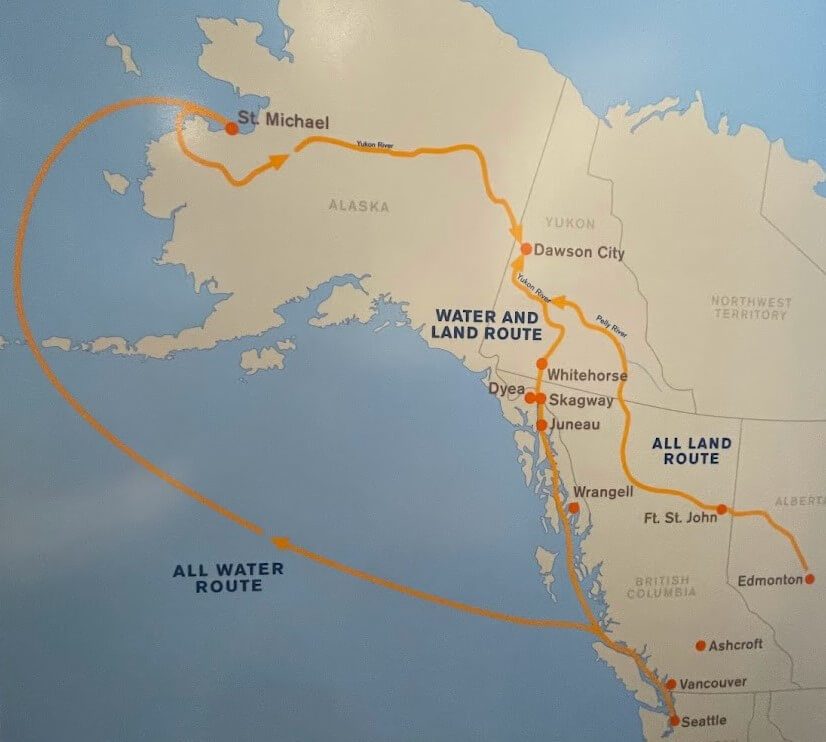
Equipped stampeders traveled over 1,200 miles to reach the Klondike.
There were three main routes:
- The land route from Canada. This difficult two-year route was taken by nearly 2,000 travelers.
- The water cruising to St Michael. Considered the “rich man’s route,” it involved less than 3,000 people.
- The water and land route through Dyea, Skagway, and Juneau. Chilkoot Trail out of Dyea and White Pass out of Skagway were the most popular routes.
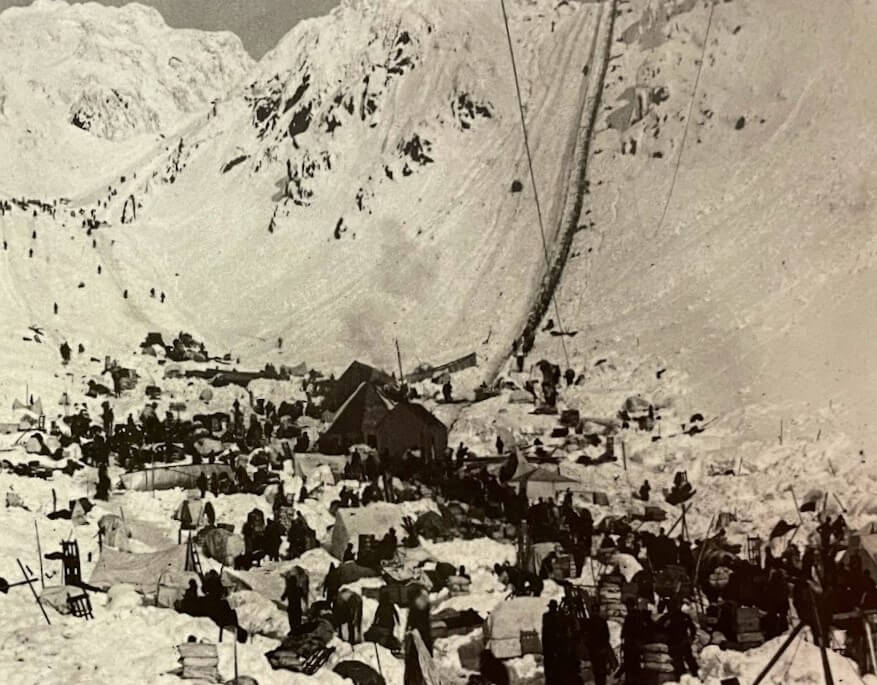
The 1,500 “Gold Stairs” was the final climb over Chilkoot Trail. On average, people climbed it 30 times (two per day) to haul their supplies to the top.


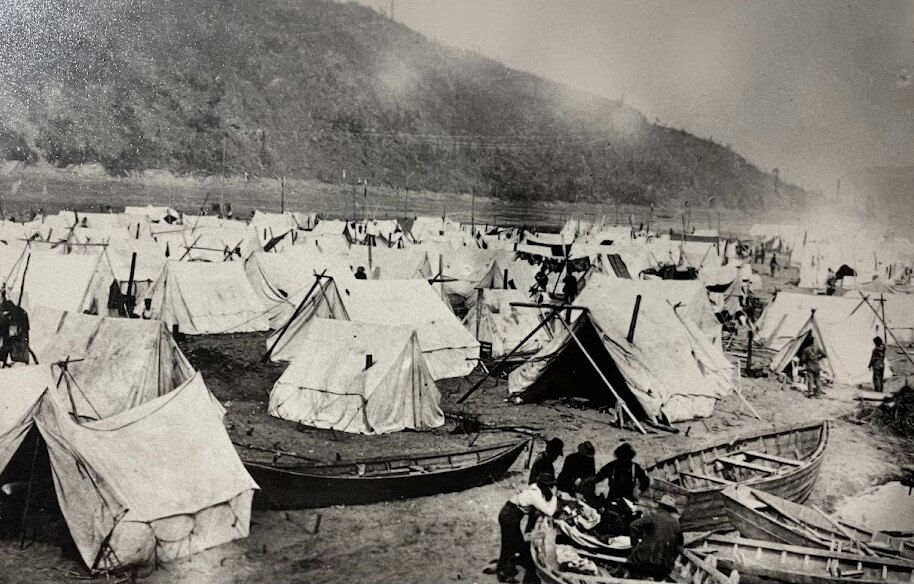
The routes were difficult in this wild territory. Stampeders confronted many obstacles: a wild environment, rugged mountains, inclement weather, crowded trails, illness, and accidents.


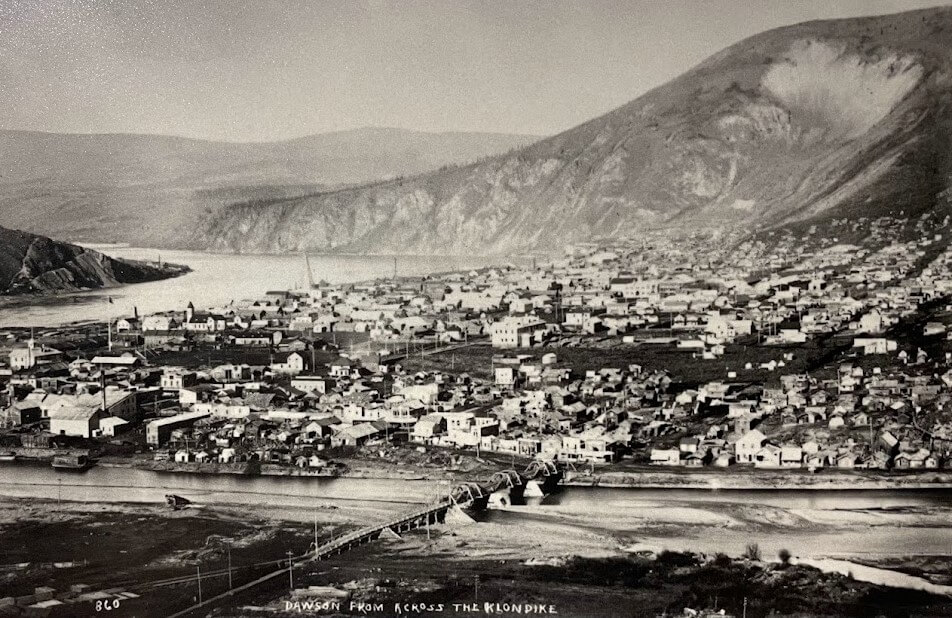
The Gold Rush transformed local cities. Businesses flourished to supply materials and services to stampeders. As an example, Dawson City expanded from 1,500 inhabitants in 1897 to 30,000/50,000 during the gold rush. By 1899, there were many amenities like a telephone system, electricity, a hospital, dozens of hotels, etc.
Dawson City in early 1898 (left) and in 1899 (right)
The Klondike Finale
When most stampeders finally reached Dawson in 1898, gold fields were claimed. This deception and disillusion lead many to travel back. The explorers who stayed either worked for others in the successful claims or for the booming city.
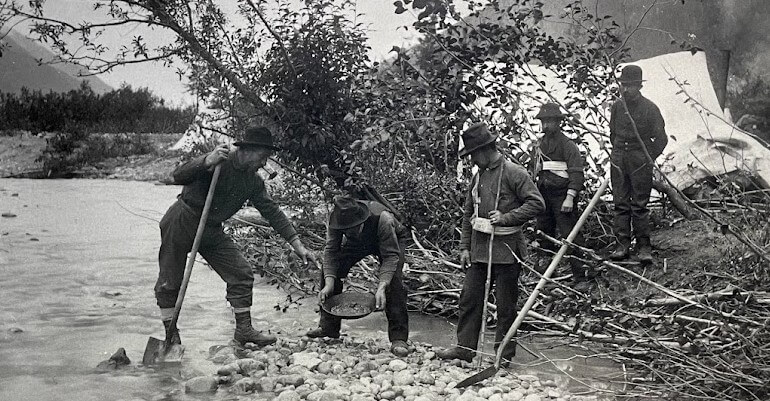

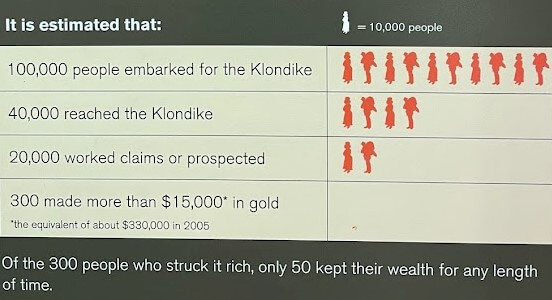
Finally, only one in five travelers prospected for gold, and only 0.3% succeeded.
Aside from its economic impact, this gold rush adventure destroyed Native people’s life, and culture. Stampeders brought new diseases and disrupted local territories, impacting hunting and fishing traditions.

The gold fields devasted and polluted the environment. The landscape changed with large mining fields, damaged forests, and streambeds.

Based on my visit on September 2023
Ready to explore the Klondike Gold Rush Museum?
Plan your visit:
- Location: 319 2nd Ave S, Seattle, WA 98104
- Hours: 10:00 am-5:00 pm Wednesday-Sunday.
- Admission: Free.
- Duration: I spent 1 hour discovering it.
- More information is available at https://www.nps.gov/klse/index.htm
If you enjoyed this post, please leave a comment and share it with a traveler visiting Seattle.

 DayDream Under the Stars
One thought on “Klondike Gold Rush, the Grand Adventure”