

2-minutes read
First retrospective outside of Scandinavia for painter, writer, teacher, and activist Christian Krohg. Explore his commitment and empathetic perspective on social and political issues through his artistic career.
Here is a look at” Christian Krohg (1852-1925), The People of the North.”
The People of the North
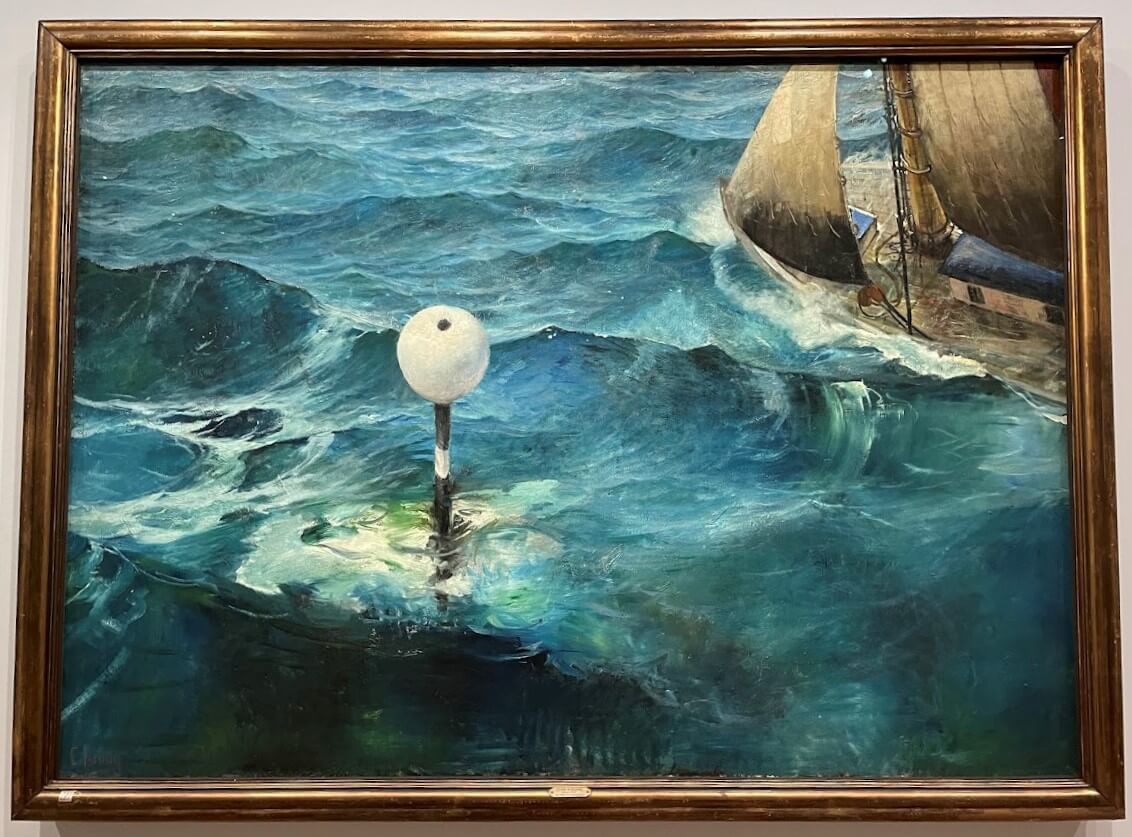
The exhibit features over 50 artworks by artist Christian Krohg. This retrospective highlights his major paintings through four sections: the sailor and maritime life, the portraits of the “Kristiania Bohemian” circle figures, Albertine, and family scenes.
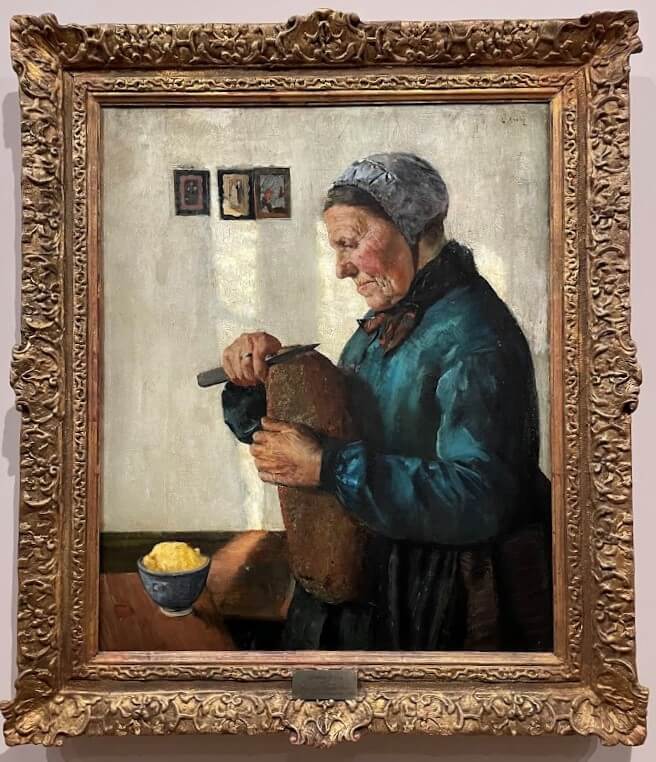


The portraits of the “Kristiania Bohemian” circle figures, from left to right, include painter Frits Thaulow, his wife Oda Krohg, and painter Gerhard Munthe.


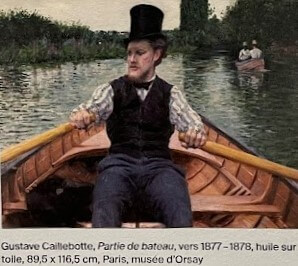
Influenced by the Realism and Naturalism art movements, Krohg employed techniques and drew inspiration from French artists like Édouard Manet, Gustave Courbet, and Gustave Caillebotte. Below is an example with his 1884 painting “Look Ahead, Bergen Harbour.”

About the Artist

Born in 1852 in Norway, Christian Krohg initially studied law before dedicating himself to art. He lived and studied in various European countries, including France, Germany, and Denmark. His artwork focuses on social issues such as poverty and prostitution, highlighting the struggles of the working class and depicting everyday life.
He declared that : “You must paint in such a way that the public is touched, moved, scandalized or delighted by what has touched, moved, scandalized or delighted you.“
With “Poor Little One!”, Oda Krhogh captured her husband Christian and their four years old daughter Nana.

My Highlights
The fishermen series
Starting in 1879, Christian Krohg focused on fishermen. In this series, he depicted life at sea in a photography-inspired style. These paintings are snapshots of sailor’s lives onboard. “Port your Helm! (Babord!)” launched his international career at the 1882 Paris salon.



Albertine

Between 1885 and 1887, Christian Krohg summarized his realist novel, “Albertine”, with a large painting called “Albertine in the Police Doctor’s Waiting Room”. The day after its publication, the book was banned in Norway for reasons of public decency. The story, supposedly based on one of the artist’s models, narrated the life of a poor girl who became a prostitute after being raped by a police officer and waiting for a gynecological exam at the police station. Christian Krohg denounced social injustice and prostitution with the unjust treatment of women who are deprived of their freedom and lack legal protection.

This article is based on my visit in April 2025.
Ready to explore Scandinavian Art?
Plan your visit:
- Location: Musée d’Orsay, Esplanade Valéry Giscard d’Estaing, 75007 Paris.
- Hours: 9:30 am-06:00 pm Tuesday-Sunday. 09:30 am-09:45 pm Thursday.
- Exhibit on view from March 25th, 2025 – July 27th, 2025
- Admission: 16 euros.
- Duration: I spent 1 hour discovering it.
- Parking: limited metered street parking
- More information is available at https://www.musee-orsay.fr/en/whats-on/exhibitions/christian-krohg-1852-1925-people-north.
If you enjoyed this post, please leave a comment, and share it with an art lover.

 DayDream Under the Stars